
Canada Thistle

Canada Thistle
(Cirsium arvense)
Priority: - Established / Strategic Control
Tags: Agricultural | Terrestrial
Identification and Reproduction
Identification:
- This plant is a root-creeping herbaceous perennial that can grow up to 2 m tall.
- The main stem is hairy but spineless.
- Canada thistle leaves are lance-shaped with irregular lobes and sharp prickly margins.
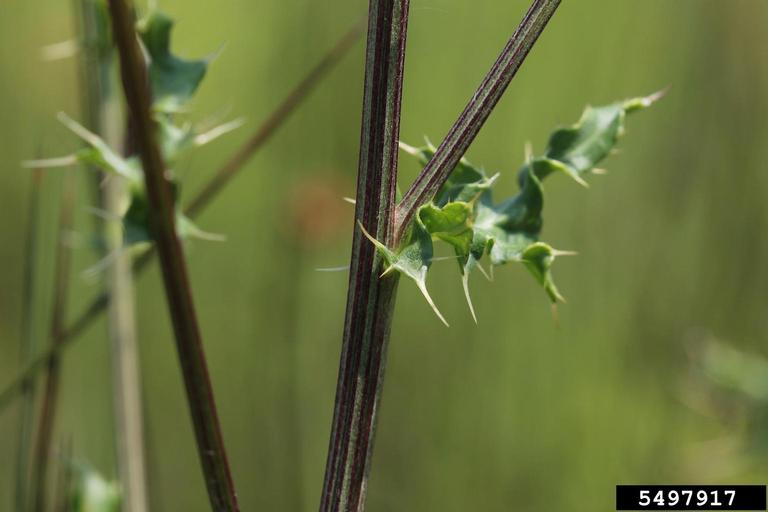
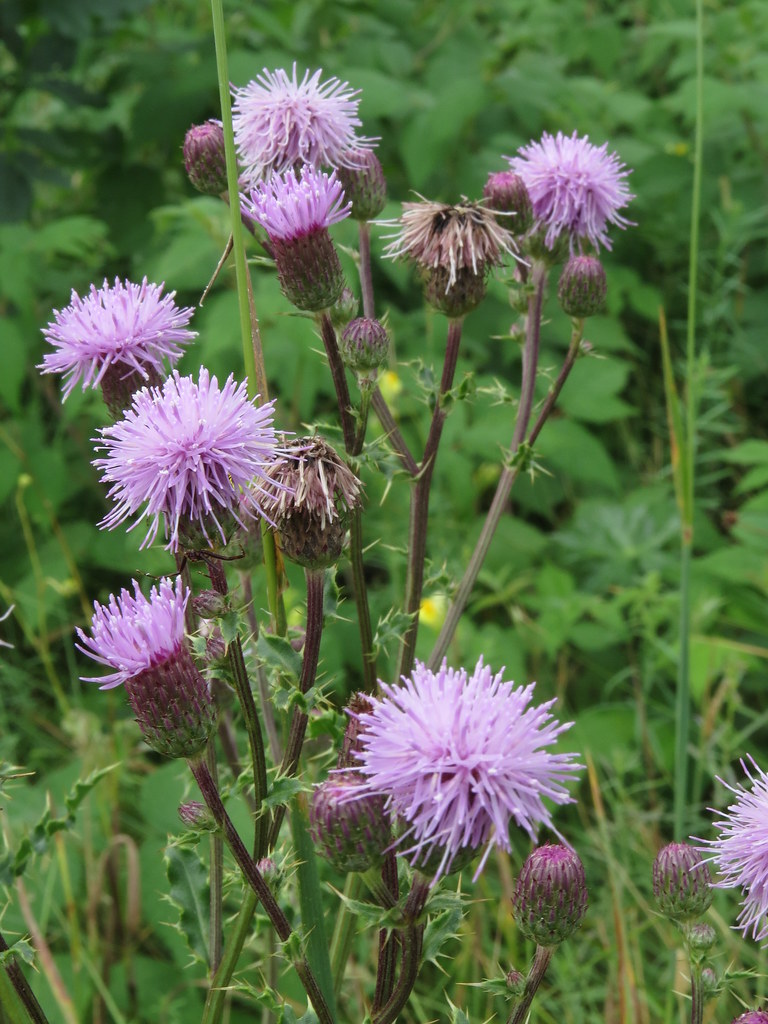
- Flowers can be white or purple, blooming in June to August.
- Seeds will look like white tufts and rante from 2-4mm long.
Reproduction:
- Canada thistle spreads quickly through horizontal roots
- Each individual plant can produce 1000 to 1500 seeds.
- Seeds can disperse through pets, wild animals, clothing, vehicles, and wind.
Habitat & Ecology
Mainly grows disturbed areas and can be found on forests, farmland, riparian, and roadsides.
Impacts
Social:
Canada thistly is a common weed in agricultural areas and is known to reduce crop yields and forage plants for grazers.
Ecological:
Outcompetes native vegetation and can establish dense stands.
Management
Mechanical/Manual Control:
- Mowing is effective prior to flowering stages.
- Consistent cutting of the plant will reduce plant growth and infestations.
- Hand pulling may be difficult as taproots are extensive and very deep.
- Treatments over several years must take place to effect plant invasions.
Biological Control:
Currently several weevils and a gall fly have been released to target Canada thistle.
Resources
- Factsheet for Canada Thistle: Invasive Species Council of BC
- Video on Canada Thistle Identifcation: Univeristy of Wisconsin
- Native and Nonnative Thistle Identification: Clackamas Soil and Water Conservation District
Header photo (Matt Lavin).
Photo Gallery



News

Chilliwack River Knotweed Walks 2026
Join us for a FREE walk along the Rotary Trail and learn more about knotweed in the Chilliwack-Vedder River! Saturdays: July 11 • Aug 1 • Aug 22 • Sept 12 - 10:00 am - 11:30 am

Tansy Ragwort Pickup 2026
If you pull out Tansy Ragwort on your property, we will come pick up your bags for disposal!